



If you’ve ever felt like your business is growing, but the weight of that growth is quietly landing on you or your team, this is usually why.
Most service-based business owners say they value team input. But without structure, safety, and follow-through, feedback doesn’t lead to change. It leads to frustration, silence, or burnout dressed up as “fine.”
Healthy team input is different.
It’s not about collecting opinions or running surveys for the sake of it. It’s about building a business that supports the people inside it, not just the growth outside it.
At Oh My Digital, we treat team input as an operational system, not an HR exercise. Because in service-based businesses, your people are the product.
Why Healthy Team Input Is a Growth Strategy
In service-based businesses, clarity affects delivery. Energy affects client experience. Burnout eventually shows up as mistakes, churn, or stalled momentum.
We see the same pattern again and again:
- Growth starts to feel heavier instead of more freeing
- Small inefficiencies compound into stress
- Feedback only surfaces once something has already gone wrong
Healthy team input helps you catch these signals early.
Not through drama. Through patterns.
When feedback systems are built into your operations, you don’t just protect culture. You make better decisions, faster, with less emotional cost.
This same thinking is baked into how we support our clients, through strategy-first systems designed to scale sustainably, not chaotically.
Asking for Feedback vs Building Feedback Systems
Most teams are asked for feedback.
Very few businesses are built to receive it well.
Healthy team input requires three things:
- Structure: clear spaces where feedback is expected, not awkward
- Safety: no defensiveness, punishment, or performative listening
- Action: visible follow-through that builds trust over time
Without all three, even well-intentioned leaders end up with surface-level answers or silence.
We take the same approach with our clients, building systems that support clarity, capacity, and consistency as they grow.
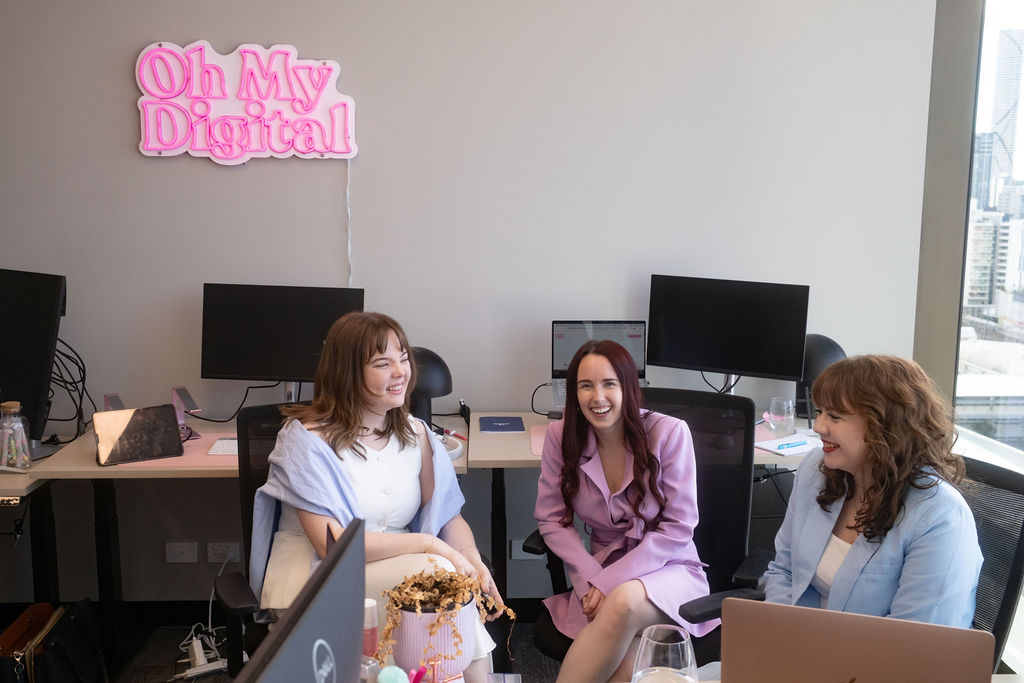
The Questions That Create Healthy Team Input
At OMD, we avoid vague prompts like “Any feedback?”
Instead, we ask specific, operational questions that surface clarity, not emotion.
Below are real examples of the questions we ask, the patterns we noticed, and what we changed as a result.
1. Workload and Capacity
The question: How manageable does your workload usually feel at the start of the week?
What we noticed: Not crisis. Not overwhelm.
But a consistent undercurrent of pressure early in the week. The kind that doesn’t show up in timesheets, but quietly erodes energy over time.
What we changed:
- Clearer Monday priorities
- More realistic task allocation
- Earlier opportunities to flag overload
Small structural changes. A noticeable shift in how the week starts.
2. Psychological Safety Around Time Off
The question: Do you feel comfortable asking for leave or time off when you need it?
What we noticed: Trust wasn’t the issue. Clarity was.
People didn’t want to feel like they were letting the team down, even when rest was genuinely needed.
What we changed:
- Clearer leave processes
- Visible coverage planning
- Reinforced messaging that rest is part of performance here
Psychological safety isn’t assumed. It’s reinforced.
3. Communication Clarity
The question: Where does communication feel unclear, delayed, or harder than it needs to be?
What we noticed: The issue wasn’t volume.
It was context. Sometimes the why arrived after the task, not before it. Small gaps that created unnecessary back-and-forth.
What we changed:
- Clearer briefs upfront
- More context around decisions
- Fewer assumptions about what’s “obvious”
Better communication isn’t louder. It’s clearer.
4. Systems and Processes
The question: Which systems or processes feel clunky, duplicated, or like they slow you down?
What we noticed: Nothing was broken.
But some systems had grown with the business, and others hadn’t kept up. Friction hiding in familiar places.
What we changed:
- Simplified repeat workflows
- Removed unnecessary steps
- Clarified ownership and handovers
The goal wasn’t perfection. It was ease.
5. Brand and Internal Alignment
The question: Where does the internal experience feel misaligned with the brand we present externally?
What we noticed: The values felt aligned.
But a few internal processes felt heavier than the experience we promise clients.
What we changed: We reviewed internal workflows through a client-experience lens and refined where things felt more complex than they needed to be.
Culture isn’t static. It’s maintained.
The Real Lesson for Service-Based Business Owners
Healthy team input doesn’t look like applause.
It looks like:
- spotting patterns early
- removing friction before it turns into burnout
- treating feedback as strategic signal, not personal criticism
The biggest risk isn’t negative feedback.
It’s misalignment going unspoken.
Healthy input doesn’t slow businesses down. Silence does.
If this resonates, it’s often a sign that the systems in your business need support, not the people. Book a discovery call here.
How to Build Healthy Team Input in Your Business
If you lead a service-based business and want to strengthen your culture without overcomplicating things:
- Ask fewer questions, but make them more specific
- Look for patterns, not one-off comments
- Close the loop by sharing what changed and why
- Treat team input as part of operations, not a once-a-year exercise
Healthy team input isn’t about being liked.
It’s about building a business that can grow without costing your people their energy, trust, or wellbeing.
If you’re ready to build a business that supports your team as much as it supports your growth, we’d love to help.
Explore our Service Guide to see how we work, or book a no-pressure discovery call to talk through what sustainable growth could look like for you.


